
Journal II
Rooted in Nature: The Story of French Oak
It begins as a seed. A single acorn, dropped into moss, in a forest that has been growing since before anyone alive can remember. Two centuries later, it becomes the most grounding thing in the room.
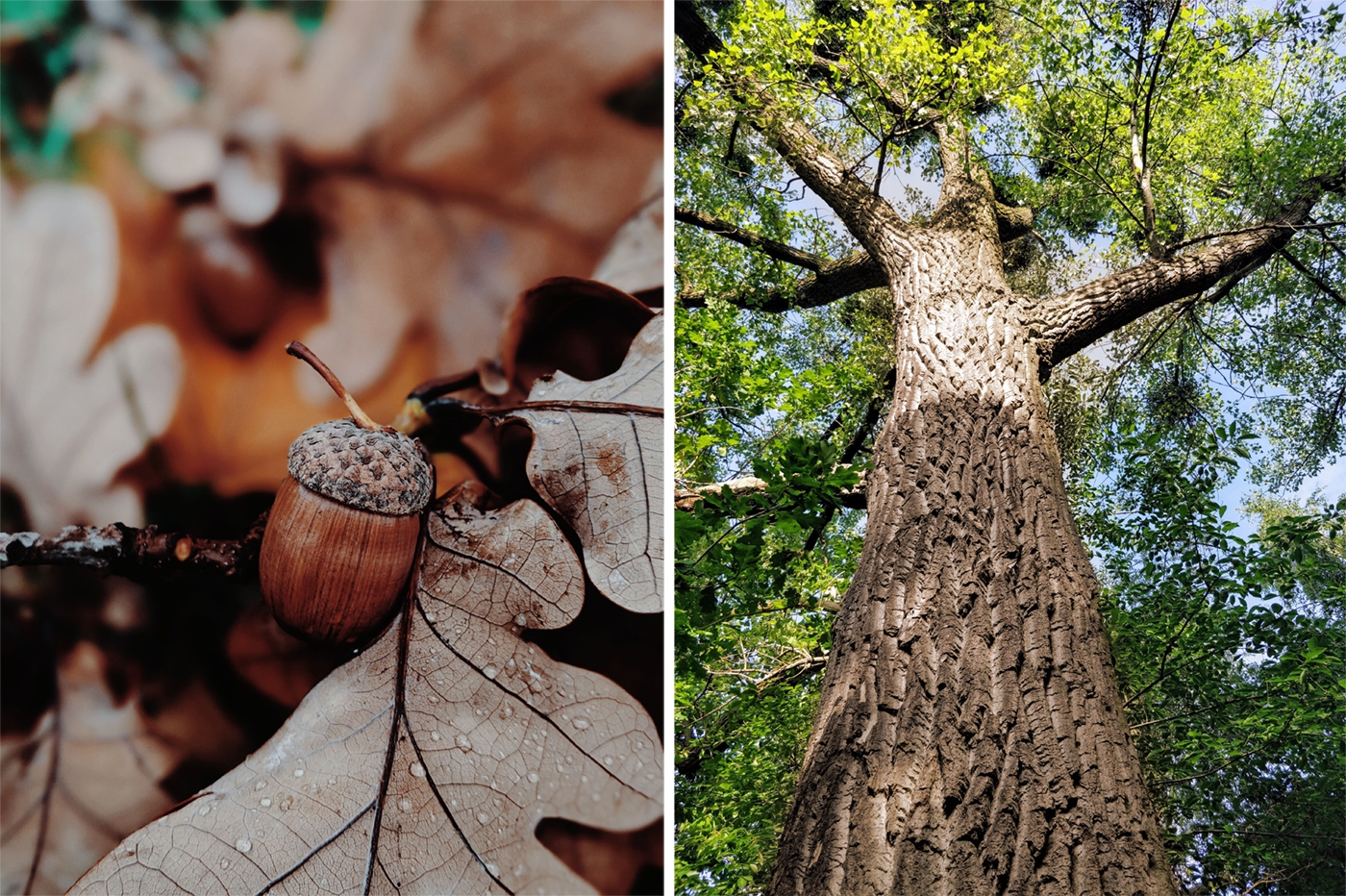
Far from Paris, in the highland regions of south-central France, there are forests so old they carry the weight of the country’s ambitions in their rings.
The oaks here tower 130 feet from floor to canopy. Each chêne de France (French Oak) is taller than a ten-story building. Its bark is scored deep enough to lose a coin in. Its roots reach further into the earth than most trees reach toward the sky. The oaks stand sentry in military-like rows, as they have for hundreds of years, patiently waiting for their higher purpose.
The rows of trees date to a crisis. In 1670, Jean-Baptiste Colbert, Louis XIV’s finance minister, looked at France’s navy and saw a country running out of timber for masts and hulls. He ordered entire forests planted on royal land, the most famous of them the Forêt de Tronçais, and wrote ordinances to protect the trees through the centuries that followed. By the time the trees were thick enough to build warships, the navy had moved to iron and steam. France found other uses for the wood.
Some of the harvest goes to Bordeaux coopers, the highly skilled artisans who craft traditional 225-liter oak barrels for aging wine. The wood also goes to floor-makers who craft parquetry, an element of aristocratic decoration. The parquet de Versailles, the 1684 design that replaced the marble of Louis XIV’s Grand Apartment (washing had rotted the joists below), set the template for the great floors of the next three and a half centuries. In 2019, when fire consumed Notre-Dame, France rebuilt the spire using trees from forests like these.
A French oak takes 150 to 250 years to reach the dimensions a miller will accept for flooring. What the forest teaches — slowly, without apology — is that some things cannot be rushed. Only when the tree is ready does it begin the next part of its life.
From the mill, the wood enters a process unlike anything else in the flooring industry.
It begins with a thermal pressure treatment. Heat and compression work in tandem to open the wood’s cellular structure from the inside out. Then comes a pH-modified water bath, and here is where the alchemy happens: the bath triggers a controlled reaction between the oak’s own tannins and an iron solution. It is the same chemistry that produces bog oak, where centuries of submersion in iron-rich peat darken heartwood all the way through. The color does not sit on the surface. It becomes the wood.
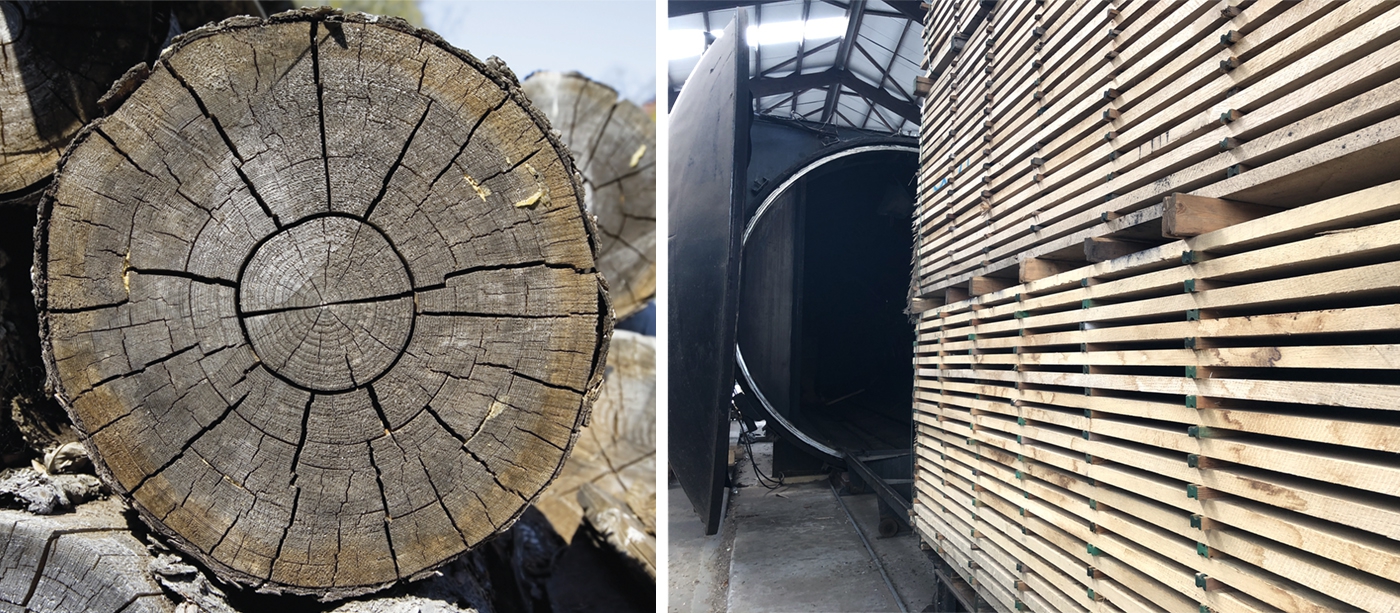
Most modern wood flooring relies on a surface stain that fades over time. This goes deeper than any stain can reach, so deep even sunlight will not bleach it. Run your hand across it. What you feel is what goes all the way down.
In the finished plank, the reward is sensory before it is visual. There is a faint mineral warmth to aged oak — something between a forest floor after rain and old library paper. The grain catches light differently than stained wood does: softer, more dimensional, as though the color has depth because it does.
Run a fingernail lightly along the surface and feel the subtle topography of the grain, the occasional dark constellation of a knot. A knot is where a branch once reached toward light. It is a record of a decision the tree made. A scar that became a feature. Each plank is, in the most literal sense, unrepeatable.
At François & Co., certified French oak products carry a red wax seal in the lookbooks. A mark of provenance that traces every plank back to the Forêt de Tronçais, and to the ordinances of 1670.
A plank that has lived this long arrives in a room with a point of view.
When designer Martyn Lawrence Bullard renovated actor Ellen Pompeo’s 1930s Los Angeles villa, he tore up the reclaimed terracotta and laid textured French oak. “The house was scrubbed of patina over the years,” he told Architectural Digest, “so we went to great lengths to revive a sense of age and dignity.” That is what old wood does that new wood cannot. It doesn’t just cover a floor. It restores something that was missing — a sense that the room has a past, that it has held people and light and life before you arrived.
On color: French oak responds to everything else in the room. With deep-green or aubergine as the prevailing tone, a warm mid-tone like Chartreuse or Josephine brings warmth without reading severe. For a monochromatic interior, the deep chestnut of Saint Amour or Armagnac pulls everything into one intentional register. In rooms anchored by soft white or plaster walls, Saint Germain or Pompei adds warmth without competing for attention. In darker, more dramatic interiors, reach for the hardest contrast: a soft blonde Lillet. Where the millwork is unfinished walnut or a darker natural wood, the old-world warmth of Cognac lets the room breathe.
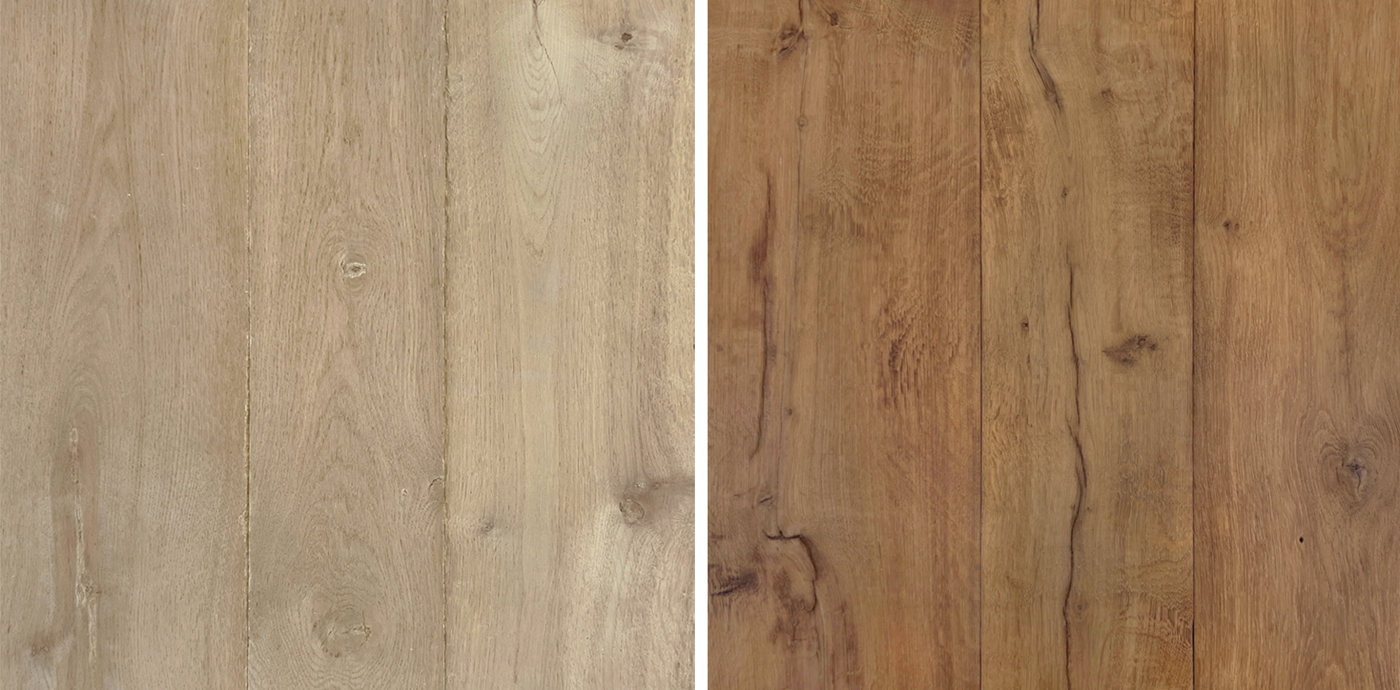
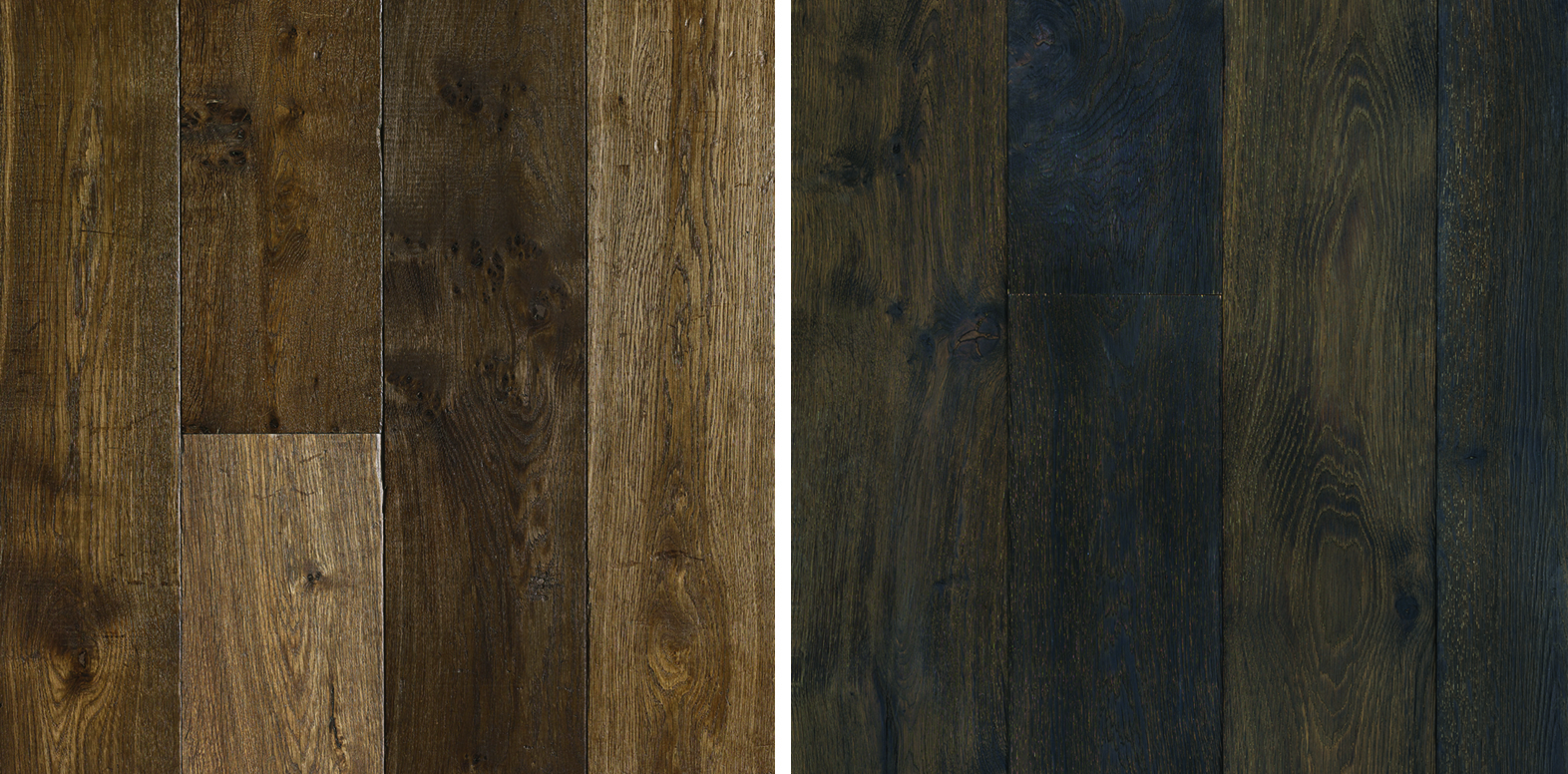
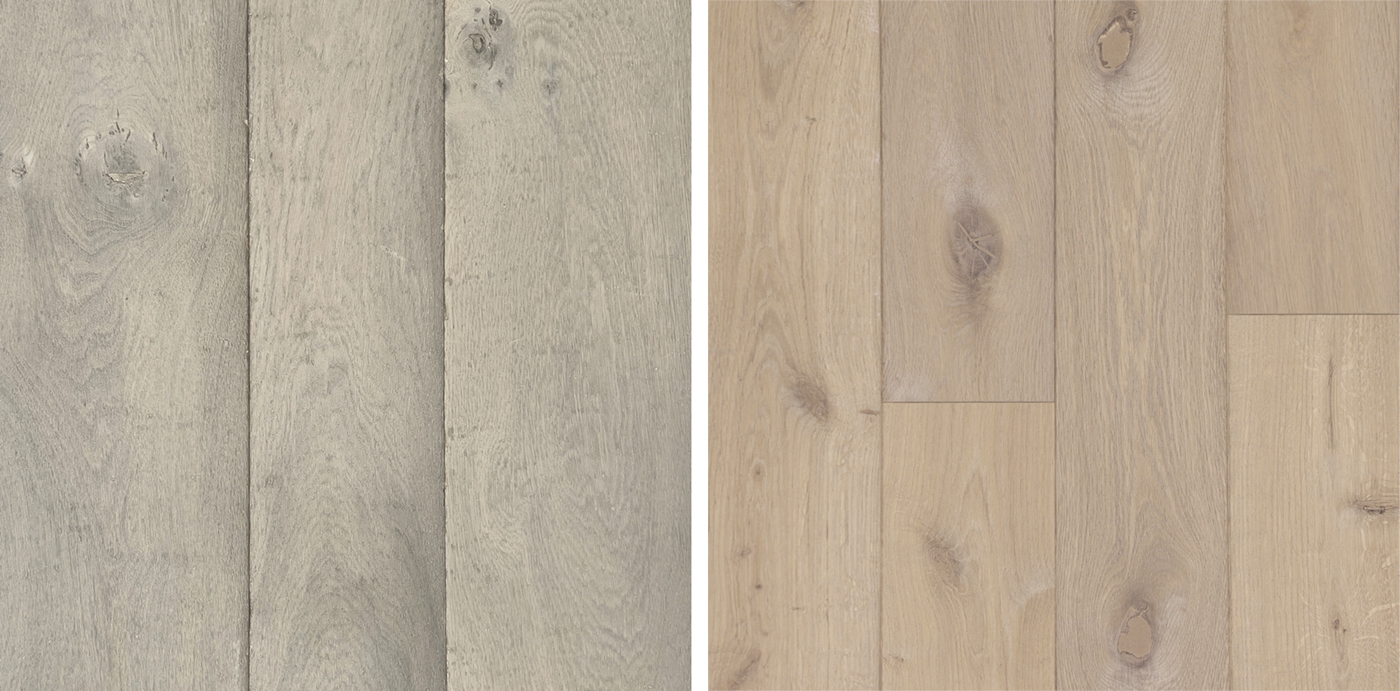
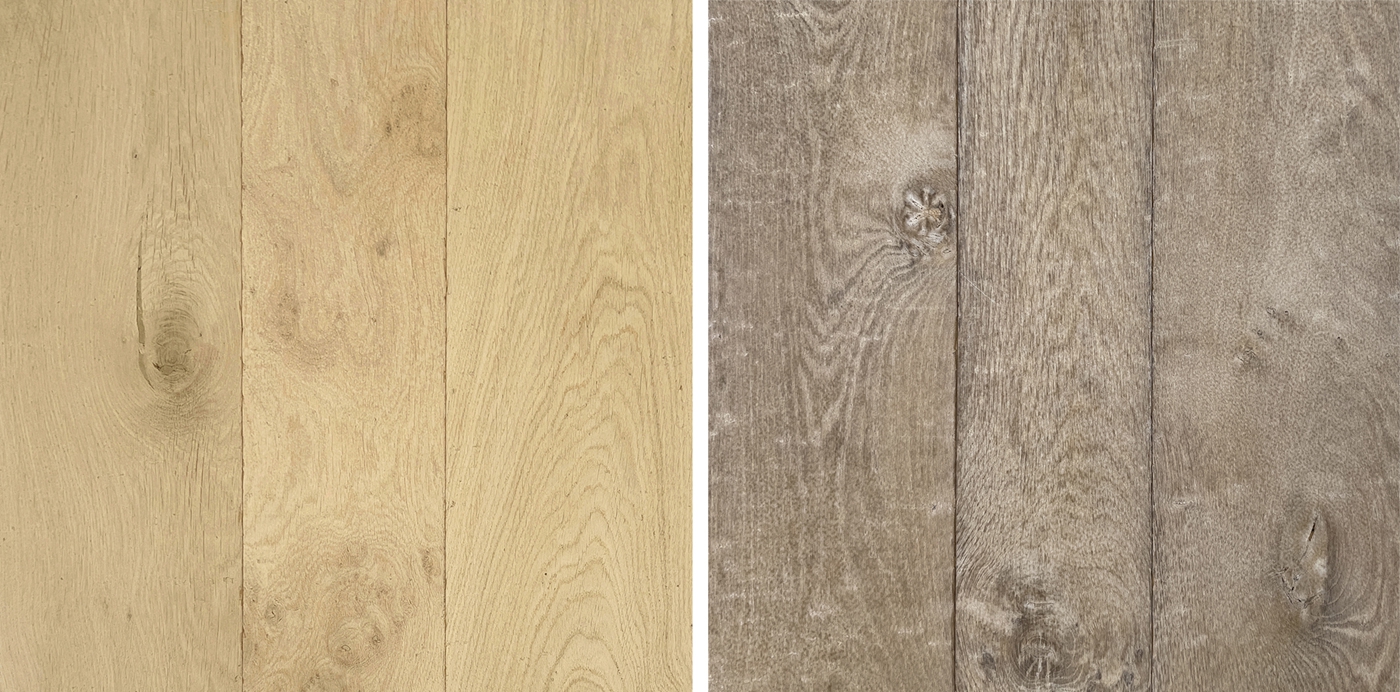
On light: North-facing rooms respond well to a warm mid-tone, like Cognac or Napoleon, to compensate for cool daylight; south-facing rooms can carry cooler grays like Orléans without feeling washed out.
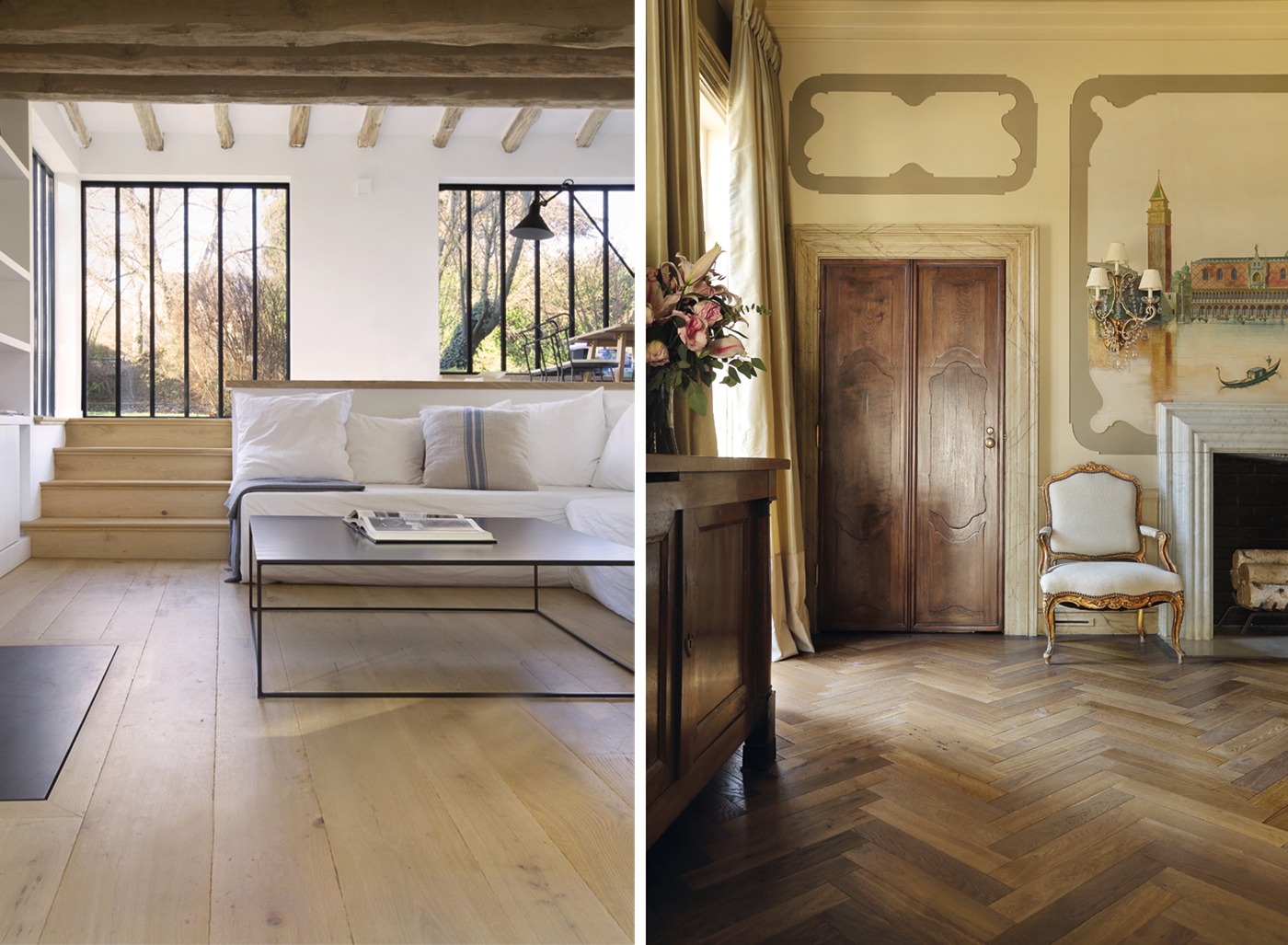
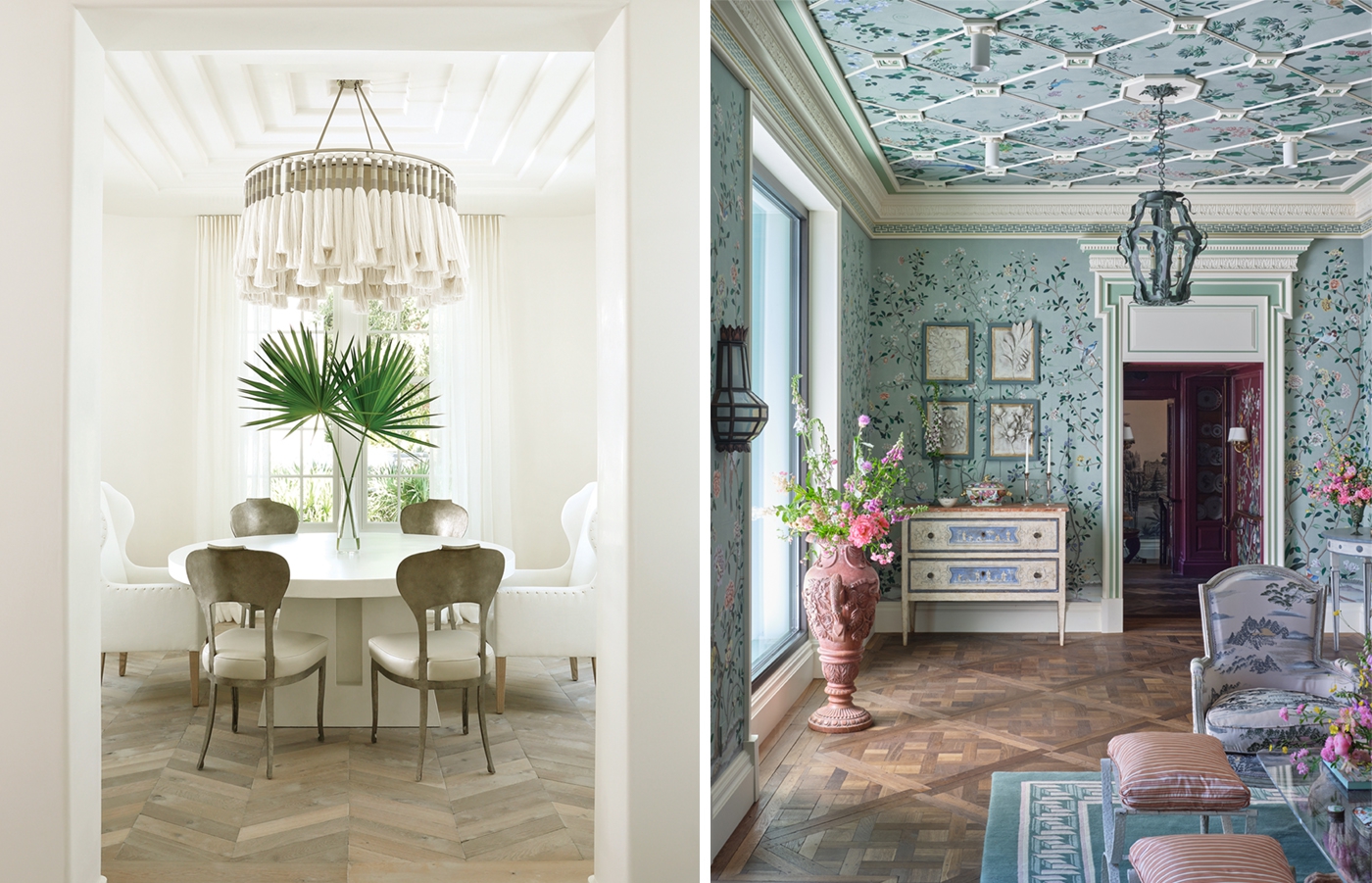
On pattern: Wide planks let the grain and color do the talking. Herringbone brings centuries-old structure and rhythm. Chevron is its more directional cousin — angled points that pull the eye forward, ideal along a hallway or gallery. And the Versailles parquet, with its woven quadrotto framework, anchors a focal-point room like nothing else.
There is something worth saying about what it means to bring a piece of the natural world into the built one and to do it with respect for where it came from.
The foresters of 1670 planted trees they would never see harvested, for a legacy they could never have imagined. What grew in their place became the barrels that age Bordeaux, the spire that rose again above Notre-Dame, and the floor beneath your feet. That kind of life — purposeful, enduring, quietly extraordinary — is what you get to bring into every room you design.
French oak began as an acorn. It has been waiting, through wars and seasons and centuries, to become the most grounding thing in your room.
When you are ready to choose it, we are ready to help. Reach out to a François & Co. design consultant to get started.