
Journal III
The Heart of the Home: History of the Range Hood
In the Loire Valley, between 1105 and 1160, masons at Fontevraud Abbey built a Romanesque kitchen they called the Tour d’Évraud. The 28-meter octagonal tower is a single carved-stone hood, sheathed in fish-scale tile, with 20 stone chimneys piercing the cone to vent the cooking hearths below. Eleanor of Aquitaine, queen of France and queen of England, one of the wealthiest and most powerful people in the world, dined on the elaborate feasts cooked here.
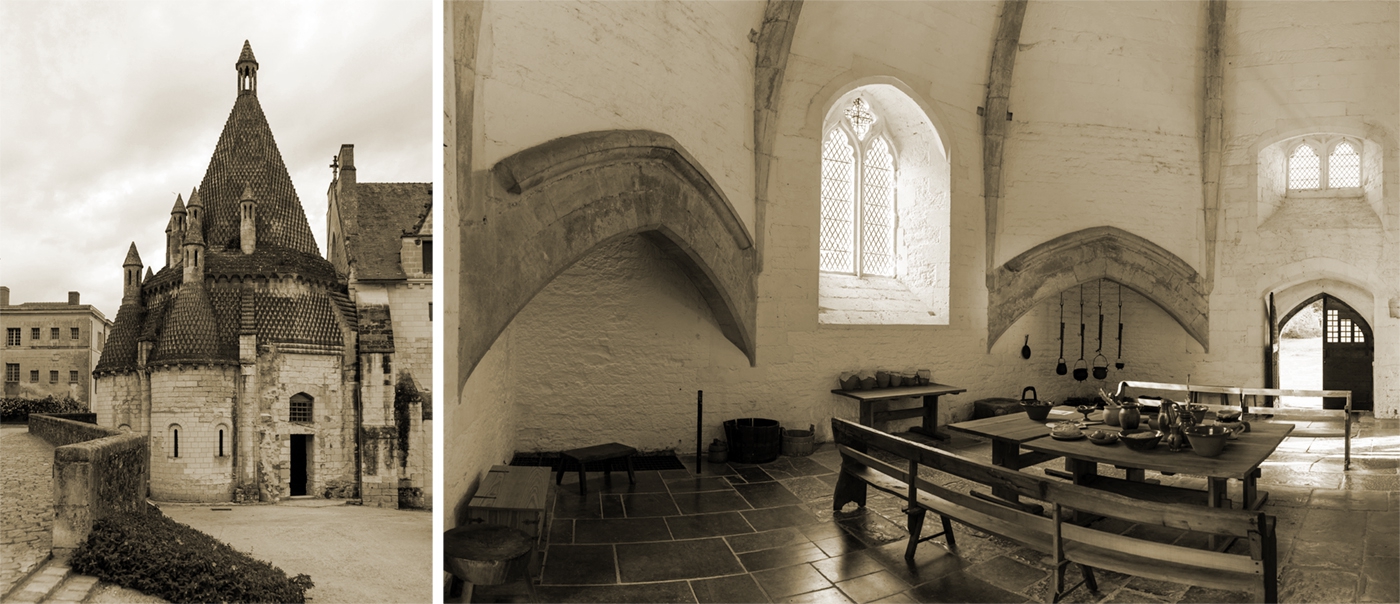
This was the moment Europe stopped treating the hood as a piece of equipment and started treating it as a work of art. Nine hundred years on, the same principle defines high-end kitchen design.
When planning a serious kitchen, the hood is never an afterthought. It may disappear into the architecture, or it may become the room’s defining gesture. This is for those who choose the latter.
Medieval masons built the first stone range hoods in the 12th century to send smoke up the flue and clear the air, turning the kitchen into a place the family could actually sit together. In England, the 14th-century Abbot’s Kitchen at Glastonbury Abbey is one of the best-preserved medieval kitchens in Europe. The square stone hall has four corner fireplaces, all venting through a single octagonal lantern in the roof.
By the Renaissance, the chimneypiece had become an architectural canvas, and in 1769 the Italian architect Giovanni Battista Piranesi, who had spent his life etching the ruins of Rome, published 61 designs for it. Two centuries on, Sir Benjamin Thompson, the inventor, spy, and Count of the Holy Roman Empire, redrew the kitchen flue itself for efficiency. The first patented ‘ventilating hood for ranges’ arrived in 1926.
For the stone hood, François & Co. works in Scagliola, the company’s signature material — a reformed stone hand-pressed into molds, and the craft behind some of the most considered kitchens in the world.
Scagliola was perfected by Italian craftspeople in the 17th century. Inside the workshops of Bologna, they mixed marble dust, gypsum, and pigment, then ground the surface flat until it held light the way marble does. François & Co’s artisans are among the few in the world still working in this tradition today.
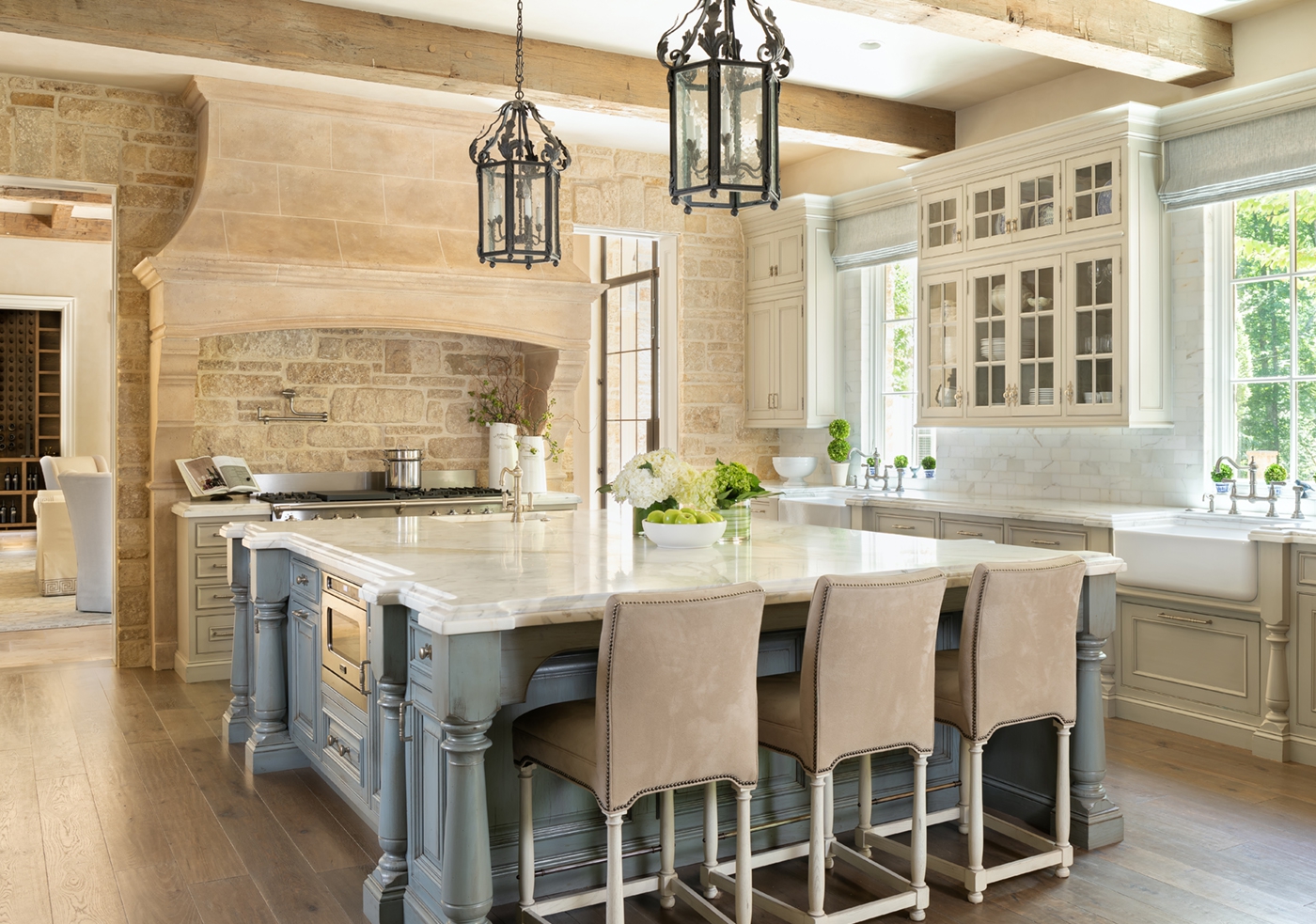
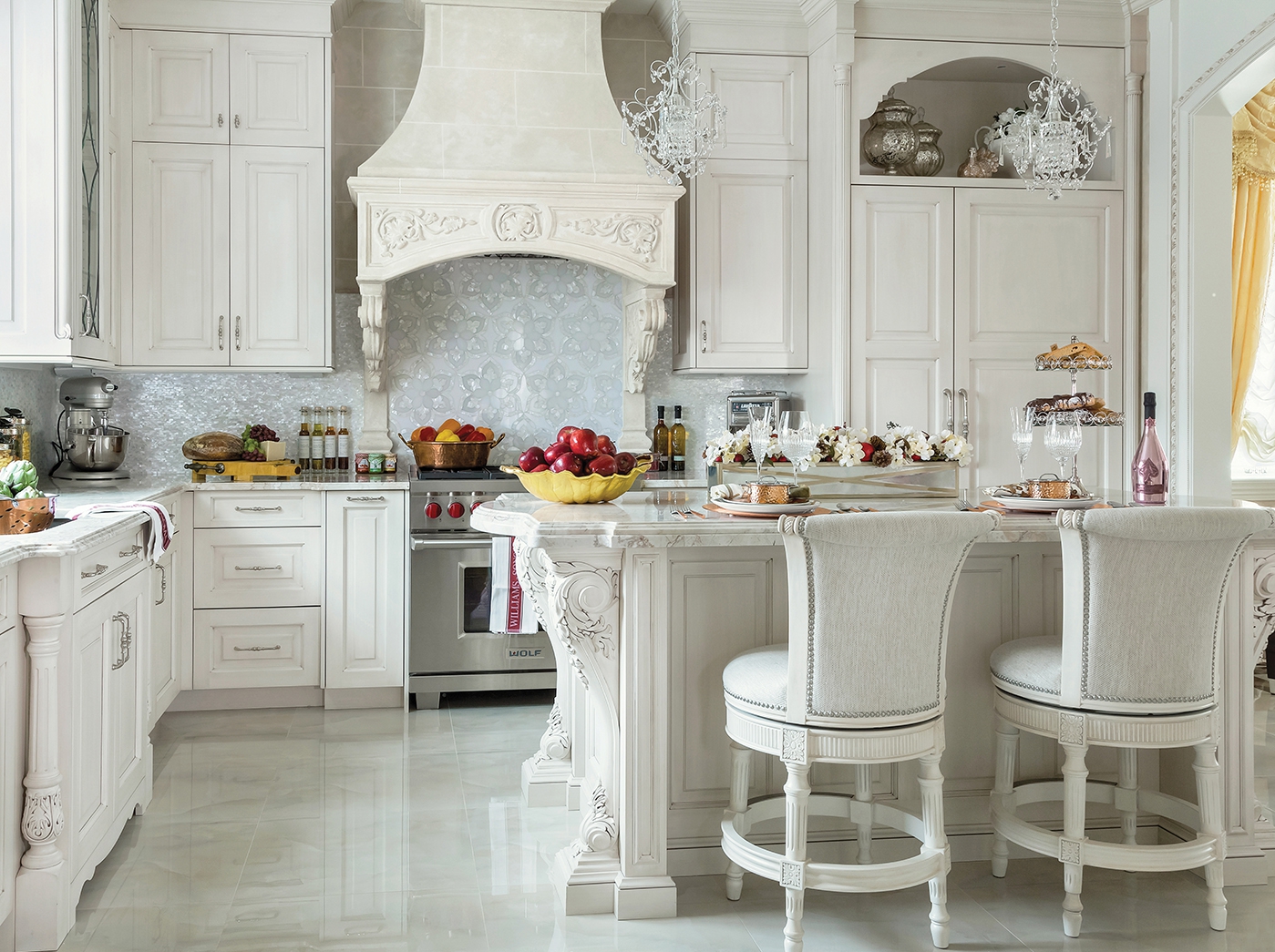
A Scagliola hood looks as though it has been there for centuries. Stone corbels anchor it to the countertop below, carrying the composition down into the room the way a column carries an arch. Above them, a cornice holds deep relief, a frieze embellished with leaves or scrolls. Much like a fingerprint, each hood holds its own record — the particular depth of a pigment, the way light catches an edge, the small marks left by the hand that finished it. From across a room, it reads as something that has lived.
Metal kitchen hoods come from a different tradition. In Normandy, the village of Villedieu-les-Poêles has worked copper since Henry I granted it to the Knights Templar in the 12th century. The residents carry the nickname les sourdins – “the deaf” – for the constant hammering.
Indoors, copper darkens into amber through natural oxidation, the rivet lines going first. Brass, unlacquered, takes on a honey patina within months in a working kitchen. Pewter reads quieter than either, matte and silver-pearl, as it did on medieval banquet tables. Zinc carries the city of Paris in it: 80% of Paris rooftops are zinc, and the bistro counter, le zinc, is the same metal poured flat. A zinc hood drops a little of that Parisian rooftop into the kitchen.
Steven Gambrel, whose Hamptons interiors are celebrated for their considered use of antique and custom materials, installs oversized brass hoods and treats them as he does other metal hardware in a room, “like jewelry,” he has said. The scale is deliberate: a hood that commands its wall the way a stunning piece of furniture commands a room.
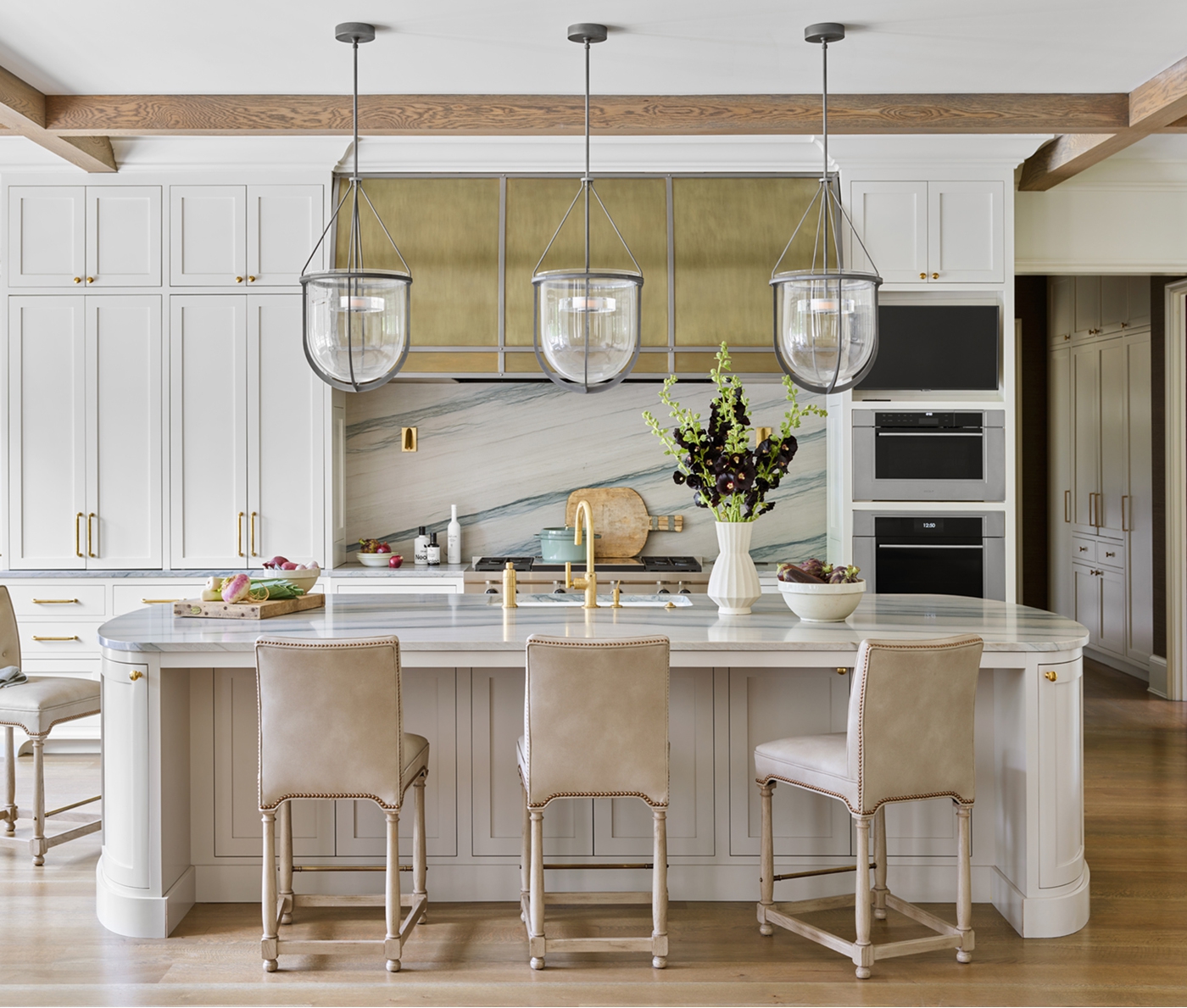
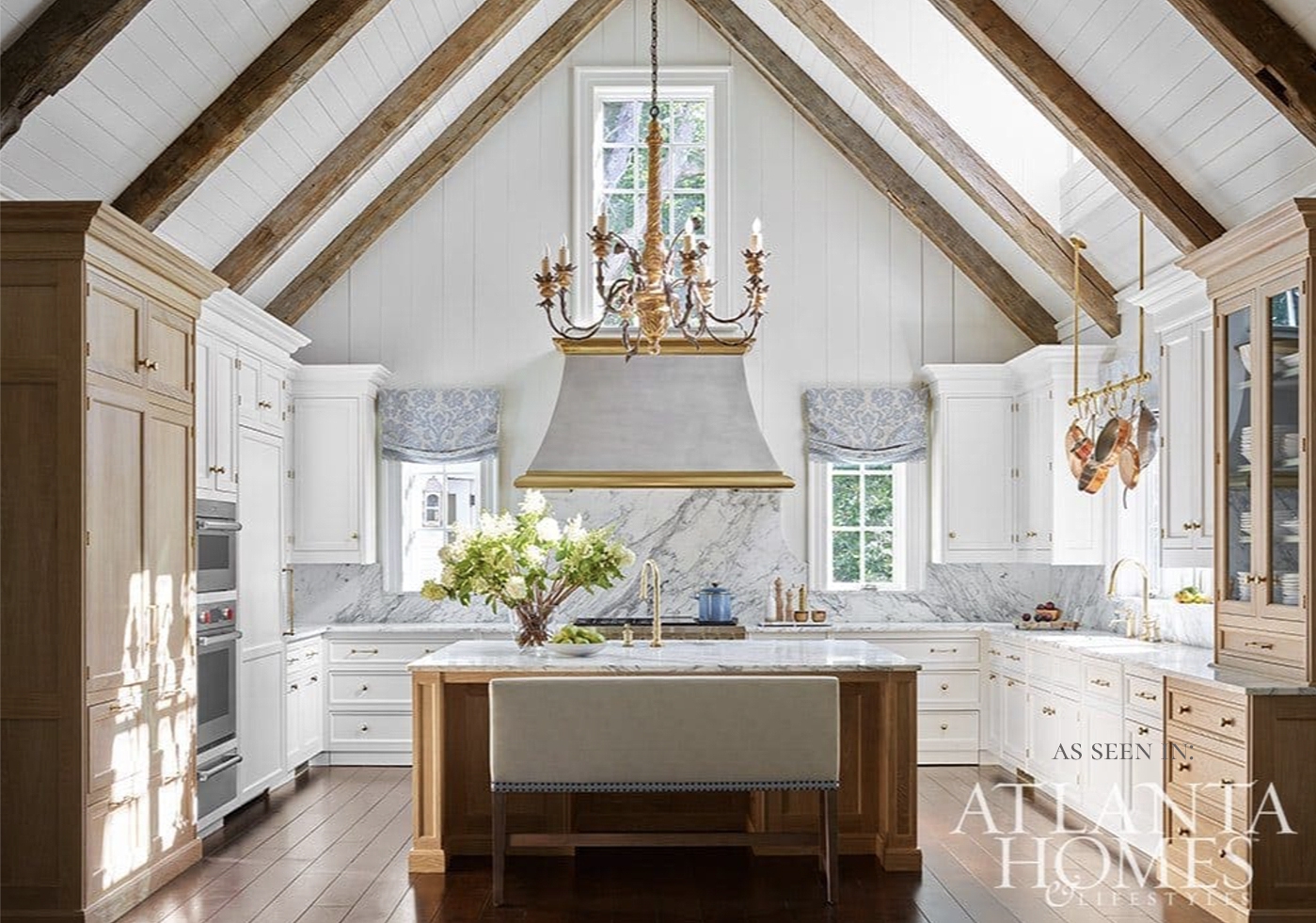
For Atlanta-based designer Suzanne Kasler, brass was the answer. It’s warm, considered, and precise in its effect. For a French Normandy-style residence in Buckhead, featured in Atlanta Homes & Lifestyles, Kasler specified a François & Co. pewter and brass hood to anchor a classic white kitchen. She described the room as needing to be “chic and beautiful — traditional but not too traditional.”
No designer chooses stone or metal for durability. The question is register: what the room demands and what the hood needs to be within it.
Stone hoods anchor a kitchen. They read as architecture over appliance, carrying weight in mass and in the eye. Their patina records use, deepening at the cornice and softening at the edges over decades. Specify stone for rooms built around gathering — a French country kitchen or a Provençal farmhouse, spaces where the hearth is the heart of the home.
Metal hoods belong to a different conversation. They catch light, reflect the room, and age with a character that no paint or finish can replicate. Specify brass or copper for a transitional kitchen where warmth is the priority. Specify zinc or pewter where the room calls for restraint — a quieter material that holds its own without announcing itself.
– Lindsay Fournier
The hood is the part of the room the eye finds first. François & Co. celebrates that first glance across two design collections.
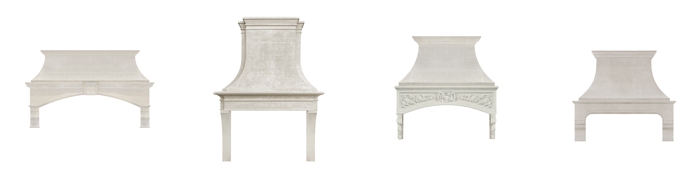
The Classic range hoods are crafted of scagliola, but can also be combined with DeCorbusier metal hoods and/or crowns. These are pieces that draw on centuries of European craft, ranging in scope from simply elegant to creations of intricate beauty, and in scale from grand and majestic to delicate and understated.
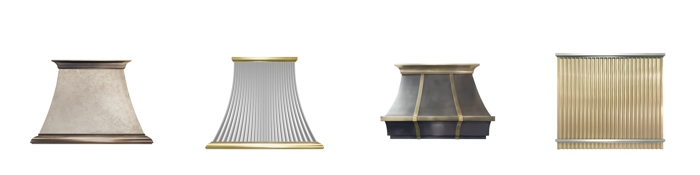
The Moderne range hoods unite purity of form with exquisite materials, offered in scagliola as well as DeCorbusier metals like pewter, copper, brass, bronze and zinc in an array of finishes. Each piece is minimal in ornament but commanding in presence — including a line developed in collaboration with designer Matthew Quinn, whose interiors balance a deep respect for craft with a thoroughly contemporary sensibility.
The medieval masons who built the first stone flues understood that the kitchen was more than a place to prepare food. By drawing smoke away from the hearth, they helped transform it into a space where people could gather, share meals, and connect.
Nine centuries later, the kitchen remains the heart of the home. From the monumental stonework of Fontevraud Abbey to today’s handcrafted Scagliola and metal hoods, the materials and forms have evolved, but the intention remains. More than a functional necessity, the range hood has become an architectural centerpiece, bringing beauty, character, and a sense of permanence to the room where so much of life unfolds.
At François & Co., we believe the heart of the home deserves that same thoughtful attention to design. Our team would love to help you bring that vision to life.