
Journal IV
Natural Stone in Luxury Kitchen Design: From Milan Design Week to Marmomac 2026
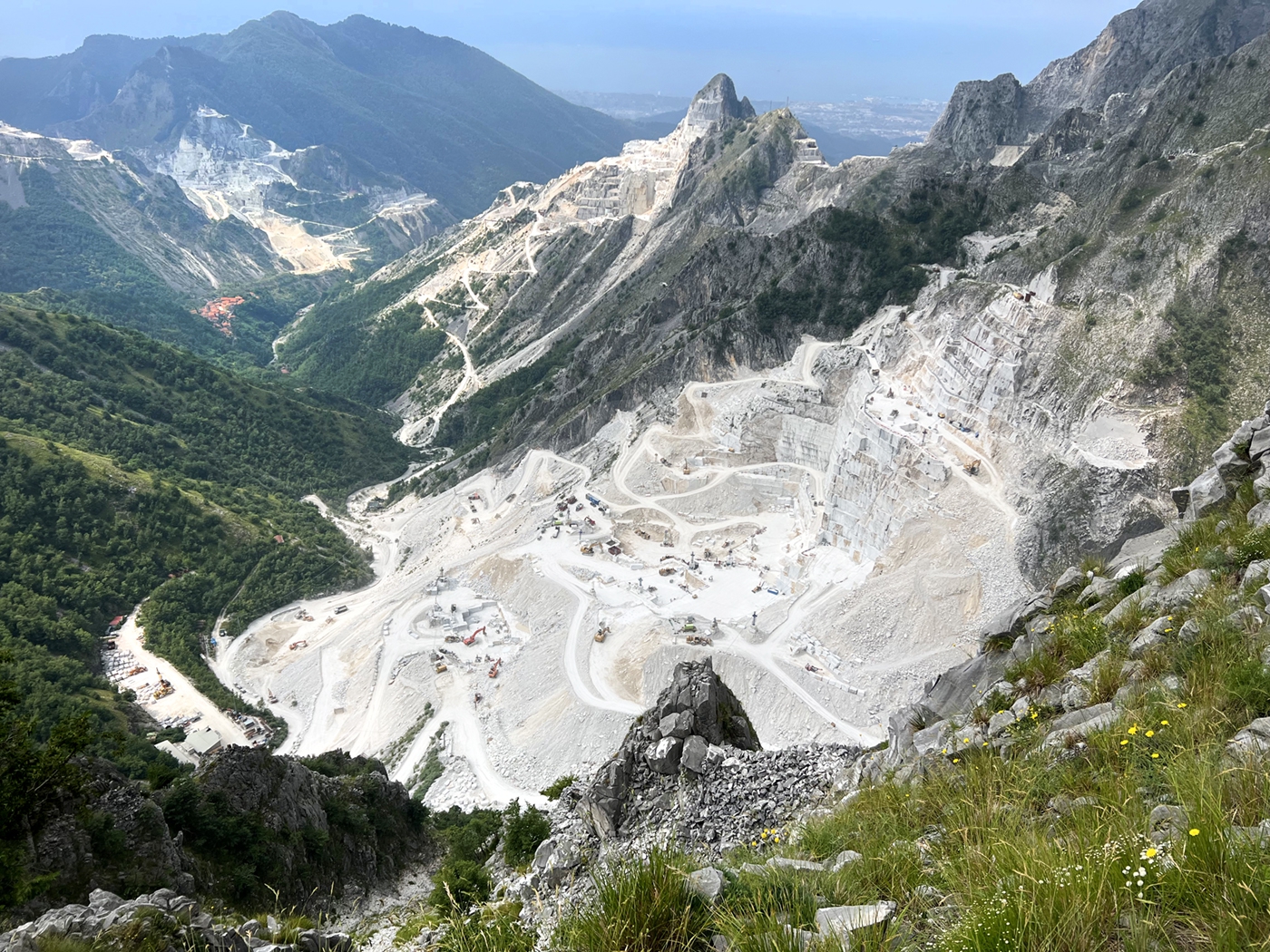
The warehouse smelled of stone and diesel and something older than both. I was standing in Carrara, Italy, inside one of the vast warehouses where stone slabs wait in rows like pages of an unread book, each one a piece of a mountain that took millions of years to become what it is. Outside, the Alpi Apuane rose white against the sky, the same mountains that supplied marble to Michelangelo, the same mountains that have been slowly, deliberately cut since Roman times.
Cristina Ventre was beside me, checking weights for a shipping container, moving through the warehouse the way some people move through a library. With the humble authority of someone who has read everything in it. I have worked with Cristina for years. In fact, she’s spent 28 years in natural stone: sourcing, fabrication, design, education. She is one of those people the industry relies on to understand what’s coming next.
Each year she walks the Salone del Mobile in Milan, a week when the whole city turns into a celebration of design. In September she was in Marmomac 2026 in Verona, the stone industry’s own fair, marking its 60th edition. She loves these weeks for what they reveal, a first look at where the industry is going.
My work at François & Co. takes me to the quarries, warehouses, and mountain towns where these materials begin. Traveling through Italy with Cristina deepened something I already knew about stone. “Every stone has a story,” she said, running her hand across a slab. “A slab is a two-dimensional photo of a three-dimensional mountain.”
What follows are Cristina’s reflections from both fairs, and her sense of where design is heading, a shift that feels less like a new direction than a return to something true.
“The vibe was definitely color,” Cristina said. “We are way past the grays and the whites. I didn’t see any of that in Milano.”
The optic whites and cool grays that defined a decade of kitchen design were absent. In their place: warmth, depth, and an explosion of color that surprised even Cristina, who has walked this fair for years.
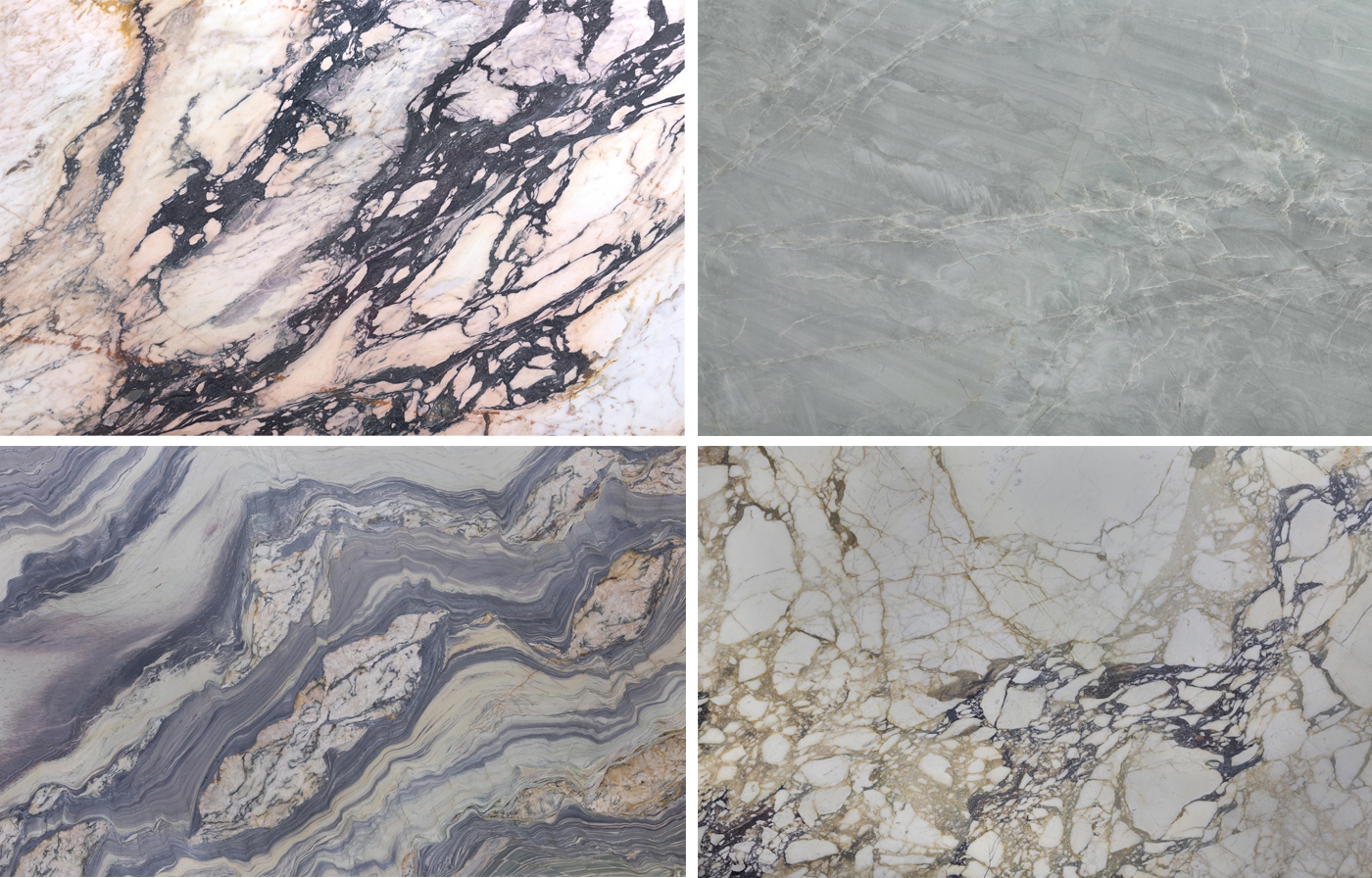
The palette arrived in two registers: deep jewel tones—ochre, ruby, emerald, forest green—and softened pastels in pale blue, rose, and peach. Even the neutrals had warmed. French gray. Taupe. Butter. Bone.
The hardware moved with it. “I haven’t seen much stainless steel,” Cristina told me. “I saw bronze. I saw copper.” The same warm architectural metals we work with to bring a distinctive texture to space. Even the lighting was warm, she noted. The whole fair had shifted toward something richer, deeper, and more human.
“The neutrals are important,” she said. “But alone, they become boring. Color gives you jazz. It gives you life.”
This is not a trend. It is a correction. A decade of restraint reaching its natural limit and giving way to something more alive.
What struck Cristina most in Milan and in Verona was not just the color. It was what stone was being asked to do.
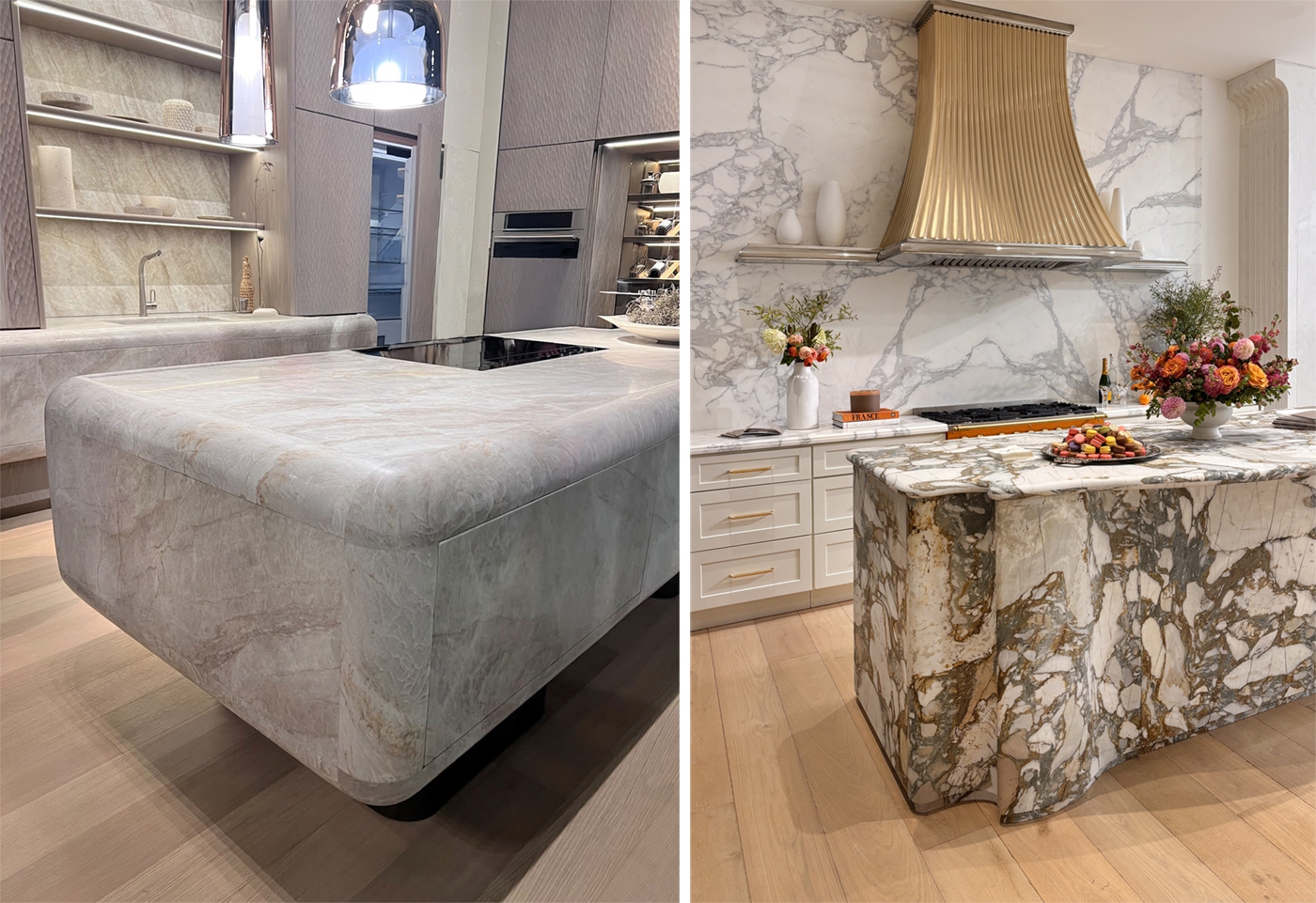
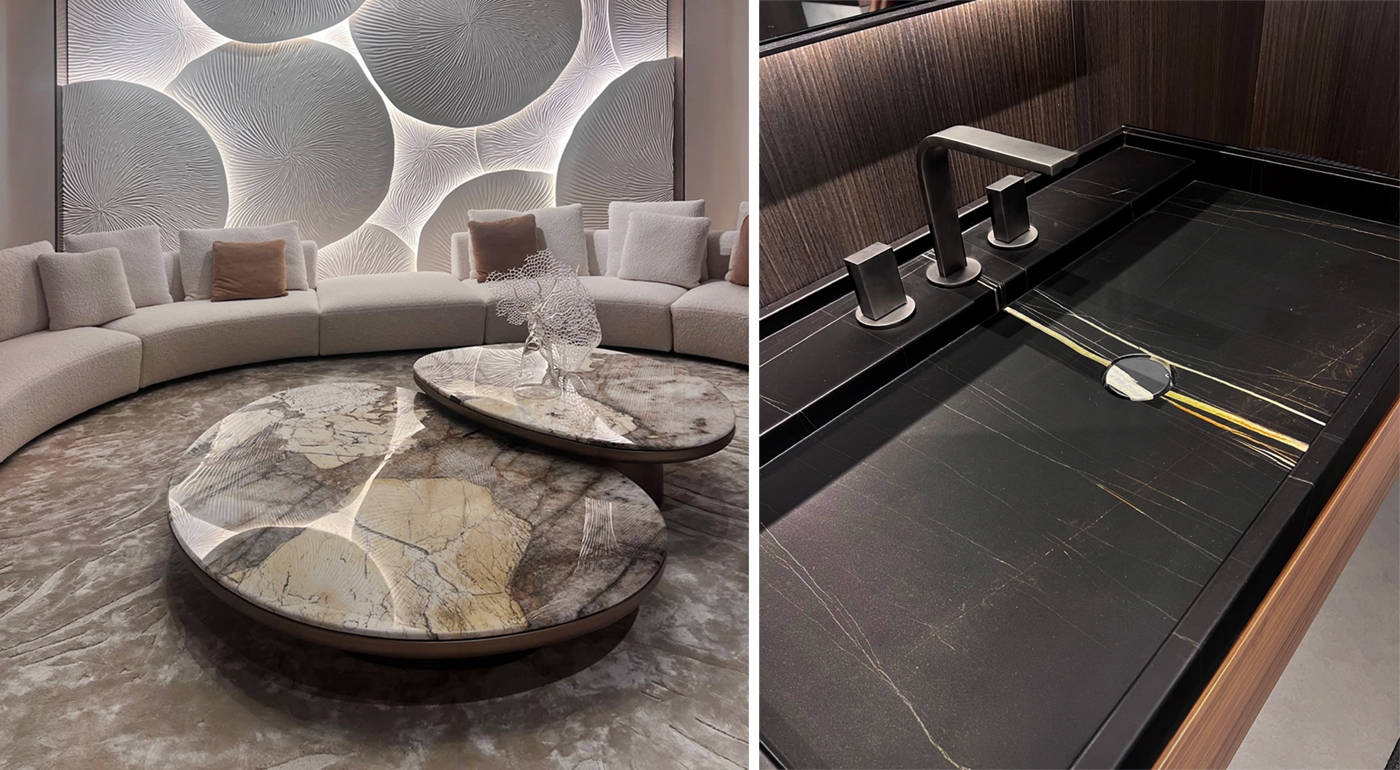
In 2026 and beyond, it was being asked to do everything. Monolithic islands faced entirely in natural stone, drawer fronts included, with sinks carved from the same block. Stone climbing walls, becoming furniture, becoming the architecture of a room rather than its surface. Coffee tables and dining tables in Italian marble and quartzite, onyx panels backlit to translucency, entire vignettes where one material flowed from floor to wall to island to sink without interruption.
“Stone can be the prima donna,” Cristina told me. “But it can also be an amazing choir to the lead singer.” And then, with the certainty of someone who has spent nearly three decades sourcing natural stone: “There is no application where you would say, I cannot use stone. You just have to ask the right questions.”
Luxury kitchen projects are where this thinking is playing out most boldly. The island is no longer just a surface; it is the room’s centerpiece, the place where stone stops being a countertop and starts being an experience. The most thoughtful designers I am working with right now are not asking which is the best kitchen countertop material in the abstract. They are asking: what does this specific kitchen need, and what story do I want it to tell?
Cristina’s answer is always the same: tell me where it goes and what it must do, and I will show you the right piece. It is exactly how we source natural stone at the Slab Boutique by François & Co. by origin, by hand, and always according to the needs of the project.
In a world of porcelain that photographs like marble and quartz engineered to look like stone, Cristina keeps returning to one word: provenance.
“Stone can be emulated,” she said. “But it cannot be copied.” The printed slabs, the manufactured surfaces, “they have no history. They were made yesterday.”
A real Italian marble slab carries millions of years inside it. The Carrara mountains are 98% calcium carbonate, formed when this area was underwater and the water pulled back quickly enough to create a metamorphic process found nowhere else on earth. “There is no other mountain in the world with the same composition,” Cristina told me. That fine, dense grain which makes Calacatta and Statuario what they are, is the result of geological events that happened once, in this place, and will not happen again.
We were standing among those mountains when she said it. I looked up at the white peaks through the warehouse window and thought about what it means to bring a piece of that into a kitchen. Not a photograph of it. The thing itself.
Marble or quartzite? Cristina’s answer is always the same. Start with the project, not the material.
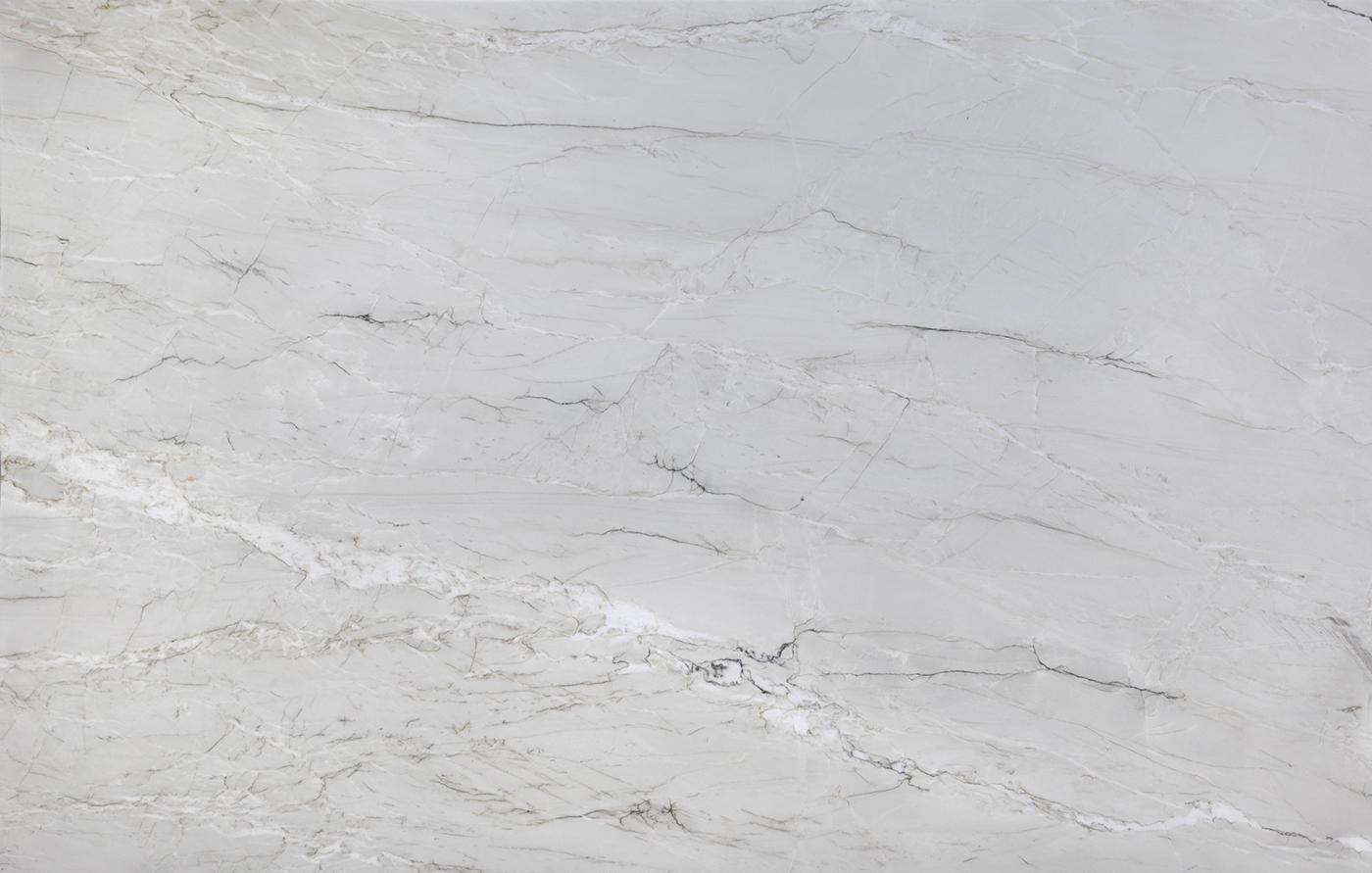
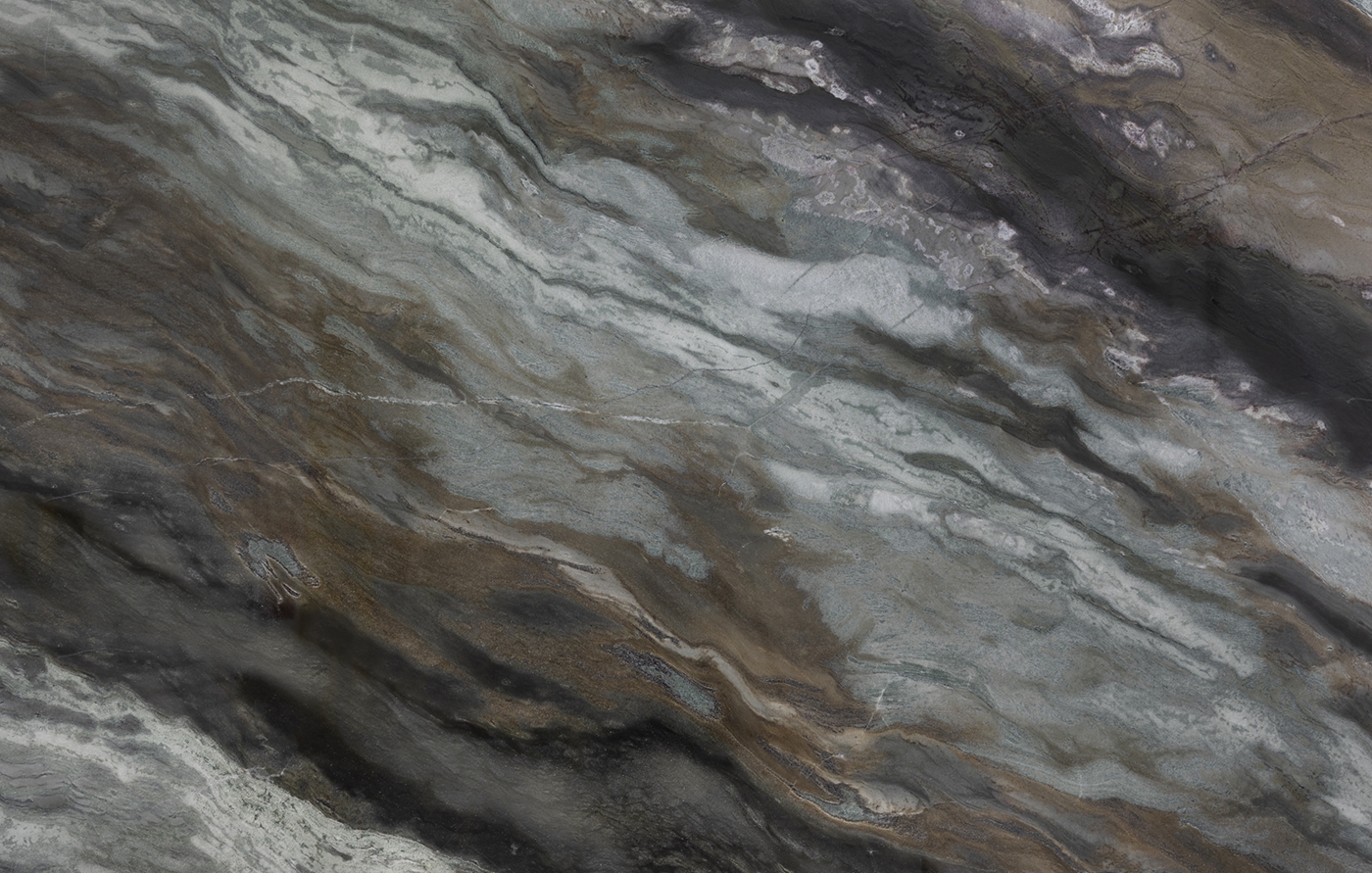
Think of stone the way you think of fabric. You would not specify the same textile for a high-traffic sofa and a decorative pillow. For high-use surfaces like a kitchen island, quartzite is often the stronger choice. Denser and harder than most marbles, it resists etching and scratching without sacrificing beauty. Blanco Superiore brings the warm neutral Milan was reaching for. Amazon Reef delivers the bold, sweeping movement and color that makes an island a statement.
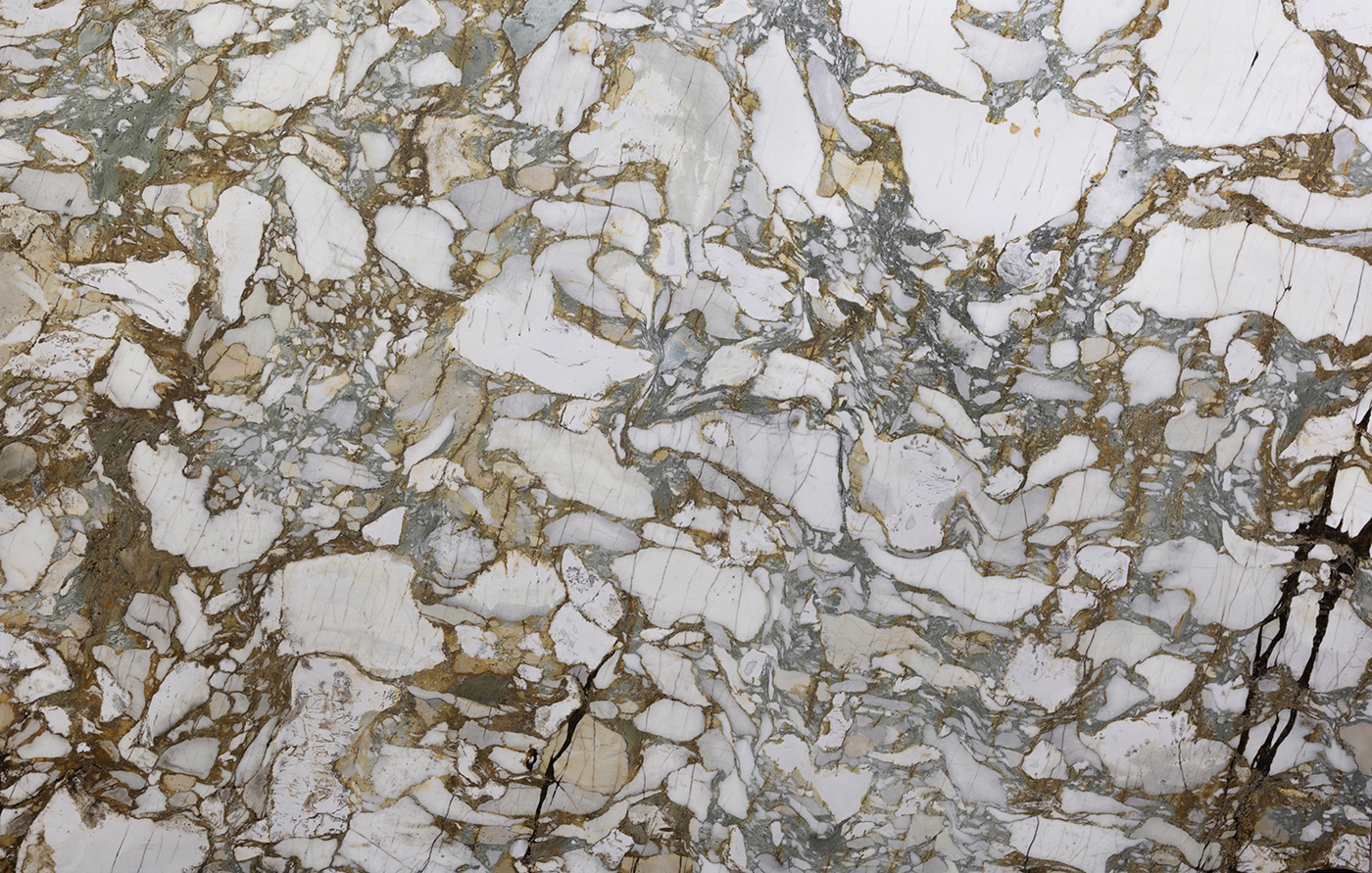
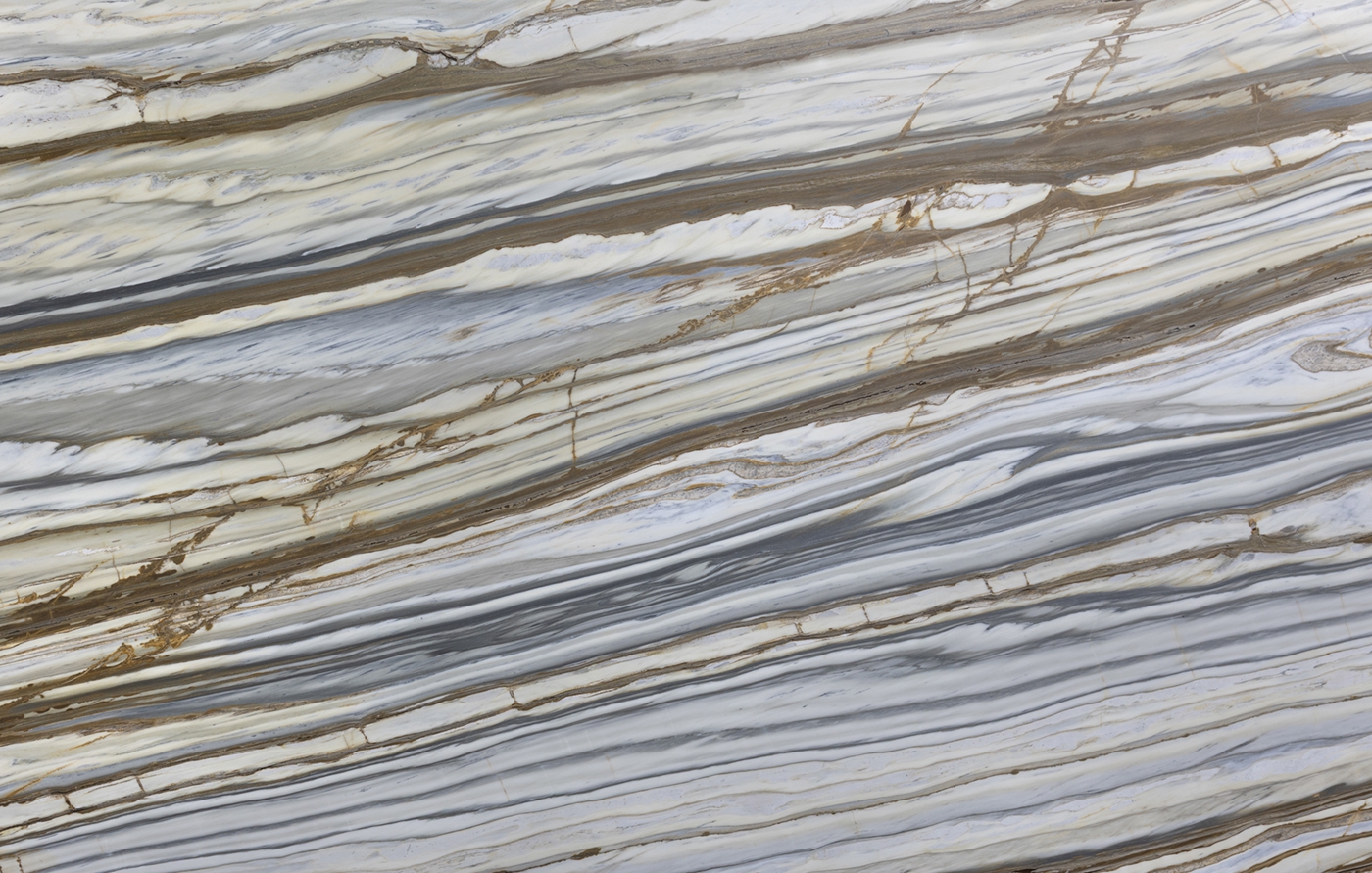
Marble brings something quartzite cannot replicate: luminosity, depth, a surface that shifts with the light and develops patina over time. “It becomes more beautiful with time,” Cristina told me. Calacatta Leonardo is the classic expression that balances neutrals and browns, tans and muted teals. For something a bit more dramatic, Zebrino Macchia Vecchia — pairs movement with the pops of color Cristina was talking about.
There is a contradiction Cristina finds maddening. The client who loves worn leather, vintage furniture, anything that carries the evidence of time, and then asks for a slab millions of years old to look flawless.
“Why are we expecting nature to be something that looks man-made?” she asked.
Natural stone takes polish unevenly across its face, because different minerals within it respond differently to the same process. A vein of iron reads differently than a field of calcite. Organic matter embedded millions of years ago catches the light at its own angle. Expecting a uniform sheen is, as Cristina puts it, simply unrealistic. But more than that, it misses the point entirely.
She calls these variations birthmarks. Not flaws, but records of how the stone was formed. And in Milan and Verona, the design world seemed to finally agree. Straight edges gave way to curves. Leathered and textured finishes on dark stone caught light across the face of a slab in ways that polished surfaces never could. The rooms Cristina walked through were validation that nature’s imperfections are what makes beauty powerful.
At Milan Design Week, Cristina walked past robots in the aisles, smart surfaces that respond to touch, kitchens that think. She came away more scared than impressed. The theme of the 2026 fair was “A Matter of Salone” and stone was chosen to represent origin itself. In a world moving faster and feeling increasingly synthetic, the oldest material in the room has become the most radical choice.
In Verona, Marmomac marked its 60th edition with Pantheon, a walk-through installation at the heart of the fair. Architect Giorgio Canale arranged fifteen monumental columns, each clad in four different slabs, sixty stones from around the world, one for each edition of the fair. Moving between them, the colors, textures, and reflections played off one another like a conversation. It was a reminder of how much of our culture, our identity, and our design language has been built from stone.
For Cristina, these design fairs felt like a full circle moment. A collective exhale. The design world reaching back toward something it had been slowly losing. “Let’s use nature to be edgy,” she said. “We can do it with natural stone, and we can do it with colors.” In an age when we ask AI for answers and control our homes with our voices, she is making the case for bringing the natural world back in. The tree that became the floor beneath you. The mountain in your kitchen. The millions of years of story held in a single slab. Nature, she believes, is not the antidote to the modern home. It is its foundation.
This is the conversation I carry back to every designer I work with now. Not what is trending, but what endures. What connects a home to something larger than itself. I returned with a deeper understanding of why grounding a home in natural stone has never mattered more.
If you are curious about what else I discovered, or ready to bring natural stone into your next project, I would love to connect. Book a call with us and let’s talk about what your next project needs.